
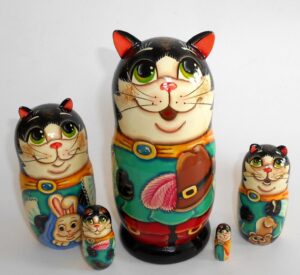
 Puss in Boots Babushka Matryoshka nesting Doll Babooshki Babushkas
 Russian Folk Art Guide: Traditional Russian Crafts, Decorative Arts & Babushka Dolls
Russian folk art is one of the world’s most distinctive artistic traditions, celebrated for its vibrant colours, intricate patterns, storytelling and exceptional craftsmanship. From hand-painted Babushka dolls to dazzling Khokhloma designs and delicate Gzhel ceramics, Russian artisans have created decorative treasures that continue to captivate collectors around the globe.
This guide explores the fascinating world of Russian folk art, including traditional Russian crafts, decorative painting styles and the cultural traditions that inspired them. Whether you’re a collector, history enthusiast or admirer of handcrafted art, Russian decorative arts offer a rich and colourful journey through centuries of creativity.
At Dolls In Dolls, we proudly celebrate this heritage through our collection of Babushka Dolls and Matryoshka Nesting Dolls.
What Is Russian Folk Art?
Russian folk art refers to the traditional decorative arts and crafts created by artisans throughout Russia over many centuries. These works often combine practical craftsmanship with symbolic imagery, storytelling, religious influences and regional traditions.
Unlike fine art created for galleries or aristocratic patrons, folk art developed among everyday people. Artisans decorated household objects, furniture, toys, ceramics, woodenware and religious items using techniques passed from generation to generation.
Many of these artistic traditions remain active today and continue to inspire collectors worldwide.
Babushka Dolls: Russia’s Most Famous Folk Art Icon
Few objects are more instantly recognisable than the Babushka doll. Also known as Matryoshka dolls or nesting dolls, these hand-painted wooden figures have become one of the most famous symbols of Russian culture.
The traditional nesting doll consists of a larger figure containing progressively smaller dolls hidden inside. This unique design symbolises family, motherhood, generations and continuity.
Over time, Babushka dolls evolved into an important form of Russian decorative art, with artists creating countless variations featuring floral designs, village scenes, fairy tales and historical themes.
Explore our collection of Traditional Babushka Dolls inspired by these artistic traditions.
Khokhloma: Russia’s Golden Folk Art
One of the most spectacular forms of traditional Russian decorative art is Khokhloma.
Originating in the Volga region during the seventeenth century, Khokhloma is famous for its striking red, black and gold colour palette. Artisans decorate wooden bowls, spoons, furniture and decorative objects with elaborate floral and berry motifs.
The shimmering gold appearance is particularly remarkable because traditional Khokhloma painting achieves the effect without using actual gold.
Common Khokhloma motifs include:
- Wild berries
- Leaves and vines
- Flowers
- Birds
- Natural landscapes
Many modern Babushka dolls incorporate floral designs influenced by Khokhloma traditions.
View our beautiful Floral Babushka Dolls featuring folk-art inspired designs.
Gzhel: The Art of Blue and White Ceramics
Another beloved Russian craft tradition is Gzhel, a distinctive style of ceramic art known for its elegant blue-and-white colour scheme.
Produced in villages southeast of Moscow, Gzhel pottery became famous for its graceful floral patterns, decorative motifs and exceptional craftsmanship.
Artists use cobalt blue pigments to create intricate hand-painted designs on white ceramic surfaces.
Popular Gzhel creations include:
- Tea sets
- Figurines
- Decorative plates
- Vases
- Ornaments
The clean elegance of Gzhel demonstrates the diversity of Russian decorative arts, showing how different regions developed unique artistic identities.
Palekh Miniature Painting
The village of Palekh is famous for producing some of Russia’s most detailed and sophisticated miniature paintings.
After the Russian Revolution, artists adapted traditional religious icon-painting techniques to create miniature works on lacquered surfaces.
These paintings often depict:
- Russian fairy tales
- Folklore heroes
- Historical scenes
- Literary characters
- Traditional village life
Palekh artworks are renowned for their intricate brushwork, vivid colours and extraordinary attention to detail.
Many decorative nesting dolls similarly draw inspiration from Russian folklore and storytelling traditions.
Russian Lacquer Boxes
Among the most prized forms of Russian decorative art are hand-painted lacquer boxes.
Created in centres such as Palekh, Fedoskino, Mstera and Kholui, these exquisite objects combine fine painting with multiple layers of protective lacquer.
Russian lacquer boxes often feature:
- Fairy tales
- Epic legends
- Romantic scenes
- Historical subjects
- Winter landscapes
Collectors appreciate lacquer boxes for their remarkable craftsmanship and artistic complexity.
Like Babushka dolls, each lacquer box reflects the skill of individual artisans and preserves important cultural traditions.
The Role of Nature in Russian Decorative Art
Nature plays a central role throughout Russian folk art.
Artists frequently incorporate:
- Flowers
- Forest animals
- Birds
- Berries
- Trees
- Seasonal landscapes
These natural themes appear across Khokhloma painting, Gzhel ceramics, lacquer boxes and Babushka dolls alike.
The recurring use of nature reflects the deep connection between Russian communities and the landscapes that surrounded them.
Russian Folk Tales and Storytelling Traditions
Many traditional Russian crafts serve as visual storytelling tools.
Artists frequently depict characters and scenes from:
- Russian fairy tales
- Folklore legends
- Epic poems
- Village traditions
- Religious narratives
These stories helped preserve cultural knowledge and shared values long before modern entertainment existed.
Even today, many nesting dolls feature characters from beloved folk tales and legends.
Why Collectors Love Russian Folk Art
Collectors are drawn to Russian folk art for many reasons:
- Exceptional craftsmanship
- Hand-painted details
- Cultural significance
- Historical value
- Unique artistic styles
- Traditional manufacturing techniques
Unlike mass-produced décor, authentic folk art reflects the creativity and skill of individual artisans.
No two hand-painted pieces are ever completely identical.
Babushka Dolls Within Russian Decorative Art
Babushka dolls occupy a special place within Russian folk art because they combine many artistic traditions into a single object.
A nesting doll may incorporate:
- Khokhloma-inspired floral painting
- Folklore themes
- Traditional costume designs
- Village scenes
- Fine decorative brushwork
This blend of artistry and symbolism helps explain why nesting dolls remain among the most beloved forms of Russian decorative art.
Discover Russian Folk Art Through Babushka Dolls
For many people, Babushka dolls provide an accessible introduction to the wider world of Russian folk art and traditional craftsmanship.
Every hand-painted nesting doll reflects centuries of artistic heritage, storytelling and skilled workmanship.
Explore our collections:
- Babushka Dolls
- Traditional Babushka Dolls
- Floral Babushka Dolls
- Kirov Babushka Dolls
- Christmas Babushka Dolls
- Babushka Doll Glossary
- Babushka FAQ
- Customer Reviews
From Khokhloma’s golden floral patterns to Gzhel’s elegant blue-and-white ceramics, from Palekh miniature paintings to hand-painted nesting dolls, Russian folk art continues to inspire collectors and art lovers throughout the world. These traditions preserve centuries of cultural heritage while reminding us of the enduring beauty of handcrafted artistry.