
-
×
 Kirov (SKY Blue/Purple ) 5-set Babushka Matryoshka nesting Doll 2 × $48.95
 -
×
Soft dolly set of 3 Felt (24cm large) Babushka Matryoshka nesting Doll 1 × $49.95
-
×
PANYA pink flowers Babushka Matryoshka nesting Doll 1 × $34.95
-
×
Anfisa with kittens in basket D Babushka Matryoshka nesting Doll 1 × $129.95
-
×
Nolinsk Natalia soft blue Babushka Matryoshka nesting Doll 1 × $44.95
-
×
Sleepy Boo 1 of 1 Babushka Babushka Matryoshka nesting Doll 1 × $249.95
-
×
Blank DIY 5-set Egg shape 15cm raw plain 1 × $27.95
-
×
7 set Bright Happy Flowers Easter Egg Shrinking Wraps 1 × $2.29
-
×
Frogs Babushka Matryoshka nesting Doll 1 × $89.95
-
×
Rider horse Horsy girl Babushka Matryoshka nesting Doll 1 × $89.95
-
×
Assya blue dress Babushka Matryoshka nesting Doll 1 × $59.95
-
×
Nolinsk Cream berry Babushka Babushka Matryoshka nesting Doll 1 × $79.95
-
×
Father Frost Giant with snowmen village scenes 10-set Babushka Matryoshka nesting Doll 1 × $899.95
-
×
Kirov 5 set (yellow/red) Babushka Matryoshka nesting Doll 1 × $48.95
-
×
Kirov 5 set (red/purple) Babushka Matryoshka nesting Doll 1 × $48.95
-
×
7 Florals Tulips , Easter Egg Shrinking Wraps 1 × $2.29
-
×
Bride red Camomiles Babushka Matryoshka nesting Doll 1 × $99.95
-
×
Nastya pink flowers Babushka Matryoshka nesting Doll 1 × $64.95
-
×
Kirov (white/red) 5-set Babushka Matryoshka nesting Doll 1 × $48.95
-
×
MINI Cat with Balalaika mini 5-set Babushka TINY 1 × $44.95
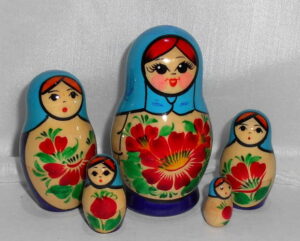 Kirov (SKY Blue/Purple ) 5-set Babushka Matryoshka nesting Doll
 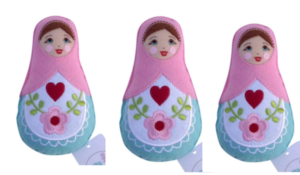 Soft dolly set of 3 Felt (24cm large) Babushka Matryoshka nesting Doll
 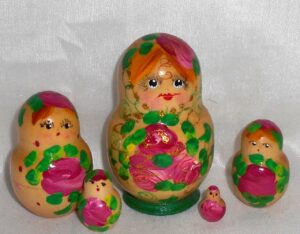 PANYA pink flowers Babushka Matryoshka nesting Doll
  Anfisa with kittens in basket D Babushka Matryoshka nesting Doll
 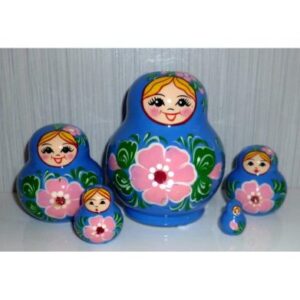 Nolinsk Natalia soft blue Babushka Matryoshka nesting Doll
 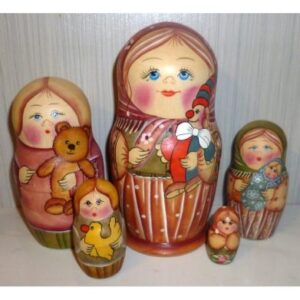 Sleepy Boo 1 of 1 Babushka Babushka Matryoshka nesting Doll
 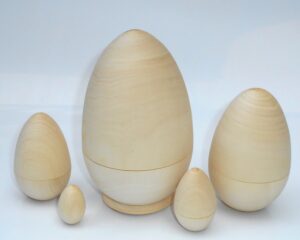 Blank DIY 5-set Egg shape 15cm raw plain
 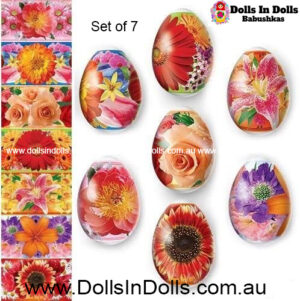 7 set Bright Happy Flowers Easter Egg Shrinking Wraps
 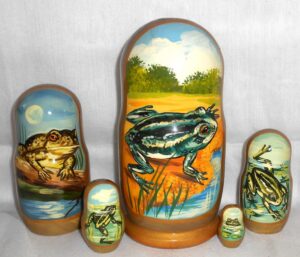 Frogs Babushka Matryoshka nesting Doll
 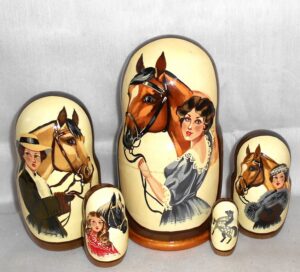 Rider horse Horsy girl Babushka Matryoshka nesting Doll
 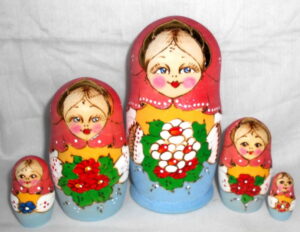 Assya blue dress Babushka Matryoshka nesting Doll
 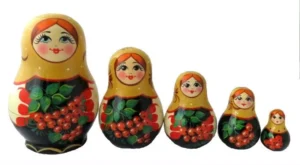 Nolinsk Cream berry Babushka Babushka Matryoshka nesting Doll
 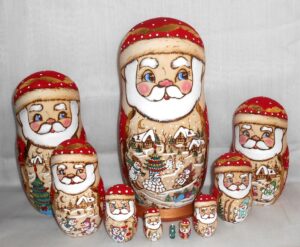 Father Frost Giant with snowmen village scenes 10-set Babushka Matryoshka nesting Doll
 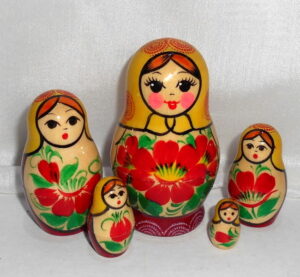 Kirov 5 set (yellow/red) Babushka Matryoshka nesting Doll
 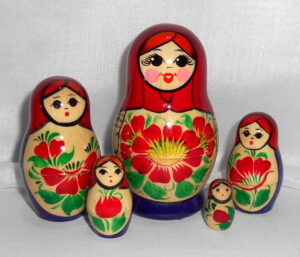 Kirov 5 set (red/purple) Babushka Matryoshka nesting Doll
 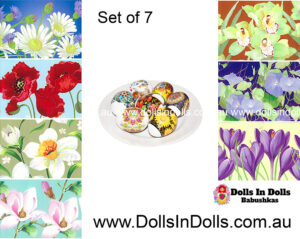 7 Florals Tulips , Easter Egg Shrinking Wraps
 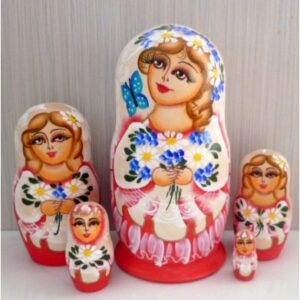 Bride red Camomiles Babushka Matryoshka nesting Doll
 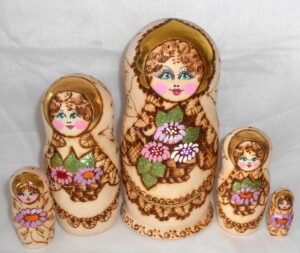 Nastya pink flowers Babushka Matryoshka nesting Doll
 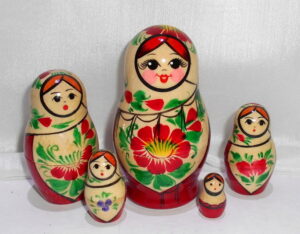 Kirov (white/red) 5-set Babushka Matryoshka nesting Doll
 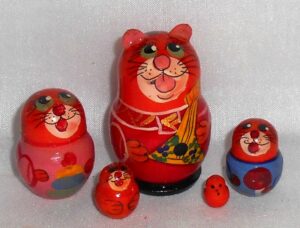 MINI Cat with Balalaika mini 5-set Babushka TINY
Origins
Every matryoshka tells two stories at once — the one painted on her surface, and the one hidden inside her, doll after doll, generation after generation. Beyond their bright colours and folk motifs, these wooden figures carry a genuine piece of Russian cultural identity, and understanding where they came from makes owning one feel a lot more meaningful. Browse the full collection on the Dolls In Dolls homepage once you’ve had a read.
Where the Matryoshka Doll Came From
The nesting doll as we know it dates back to the 1890s, a period of renewed interest in folk art and national identity across Russia. Woodturner Vasily Zvyozdochkin is credited with carving the first set, inspired by a Japanese figure called Fukusuke that also opened to reveal smaller figures inside. Artist Sergey Malyutin then painted it as a Russian peasant girl, and that single decision — dressing a foreign concept in distinctly Russian clothing — is really where the matryoshka tradition begins.
The name itself comes from “Matryona,” an old Russian first name tied to the idea of a mother figure, which is fitting given how strongly the dolls are linked to family and fertility. Since then, the craft has never stood still — artisans have continually reworked the shapes, sizes and themes, pulling in folklore, historical figures and even pop culture, which is part of why the tradition has stayed so alive. You can see that range for yourself across our Traditional Classic Dolls.
How Each Doll Is Made
Making a nesting doll is slow, hands-on work. It starts with linden or birch wood, chosen because it’s light and carves cleanly. Blocks of it are turned on a lathe into the familiar rounded shape — and getting that shape right matters, because the dolls have to sit well both on a shelf and inside one another.
Each doll is then hollowed out so the next size down fits snugly — not too loose, not too tight — before everything is sanded smooth and handed to the painter. This is where a set really comes to life. Some studios lean into fine detailed brushwork, others into carved texture, and the themes vary just as widely: florals, scenes from village life, folk tales, or something more contemporary. If it’s the floral tradition you love, our Floral Babushkas collection is worth a look, and for a different, textured take, there’s our Woodburn Dolls, where the pattern is burned into the wood rather than painted on.
What the Matryoshka Represents
A matryoshka is more than decorative — the nesting itself is symbolic. Each doll fitting inside the next is often read as a stand-in for generations of a family, one nested within the next, which is why these dolls are so tied to ideas of family and continuity.
Traditionally the outer doll is painted as a peasant woman, and over time that’s made the matryoshka something of a symbol for Russian femininity — strength, warmth and resilience all wrapped into one figure. It’s also become one of the most recognisable gifts of goodwill between cultures; a matryoshka handed to a friend or visitor says something a card can’t. If you’re choosing one as a gift, our Jewelry range and Small Items collection are popular for exactly that reason — easy to give, easy to treasure.
Old Themes, New Directions
While the traditional peasant-dress doll remains the classic, the range of what a matryoshka can be has expanded enormously. Modern sets take on fairy tale characters, historical leaders, and even animated favourites — a great way to introduce kids to the craft without losing the charm of the original. Our Cartoons Kids Stuff and Celebrity Babushkas categories are where that playful side of the tradition lives.
There’s also a growing appetite for smaller-scale sets and unpainted dolls that let you make the tradition your own. Our Mini Tiny Nester range is perfect if you’re after something compact, and our Unpainted DIY Craft dolls are a lovely blank canvas for anyone who wants to paint their own design at home.
Collecting Matryoshka Dolls
There’s a genuine collecting culture around these dolls, and it spans everything from budget-friendly traditional sets to museum-grade pieces. Value tends to come down to the artist, the fineness of the brushwork, and how rare a particular set is — collectors often chase work from specific regions of Russia known for a distinct style. If that’s where your interest lies, our Museum Quality High-End range and our broader Collectables collection are the places to start.
Nature and wildlife themes are another favourite among collectors and gift-buyers alike — have a look through our Animals & Birds range if that appeals.
Matryoshkas Beyond Russia
In literature and popular culture, the matryoshka has become a shorthand for hidden depth — the idea that there’s always another layer underneath. That metaphor has helped the doll travel well beyond its origins, turning up in film, fashion and design worldwide, and inspiring artisans in other countries to create their own nested-doll traditions.
Seasonal and devotional pieces have become part of that same story. Our Christmas Nook and Easter Nook collections bring the craft into holiday traditions, while our Religious Art Icons range reflects the doll’s connection to Russian devotional art. And for something a little different, our Egg Shrink Sleeves collection is a fun, low-cost way to bring matryoshka-style patterns into your Easter display.
A Tradition Still Being Written
More than a century on, the matryoshka hasn’t lost any of its pull. Whether you’re drawn to a classic hand-painted set, a modern design, or a piece for a collection you’ve been building for years, each doll carries forward a craft that’s been passed down through generations of Russian artisans.